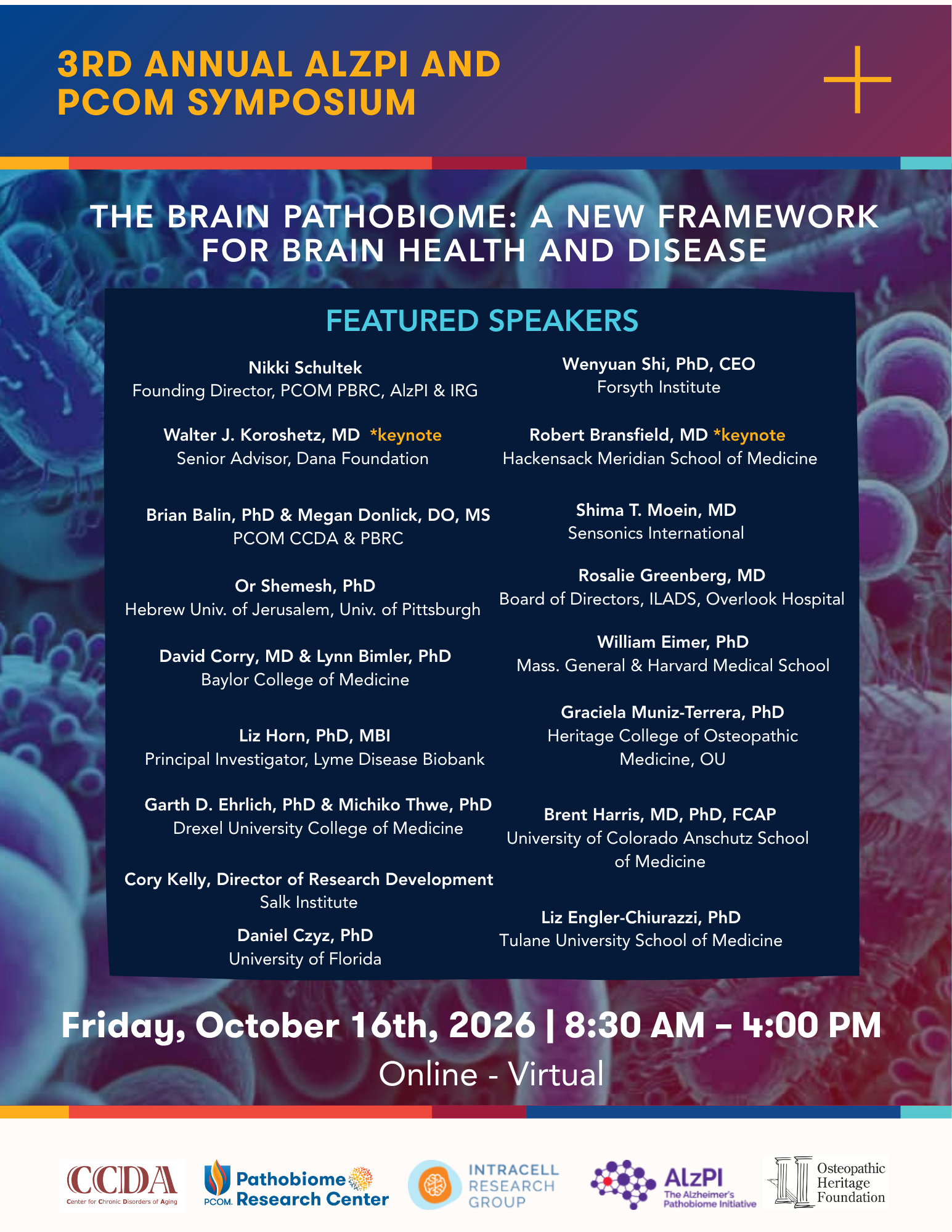
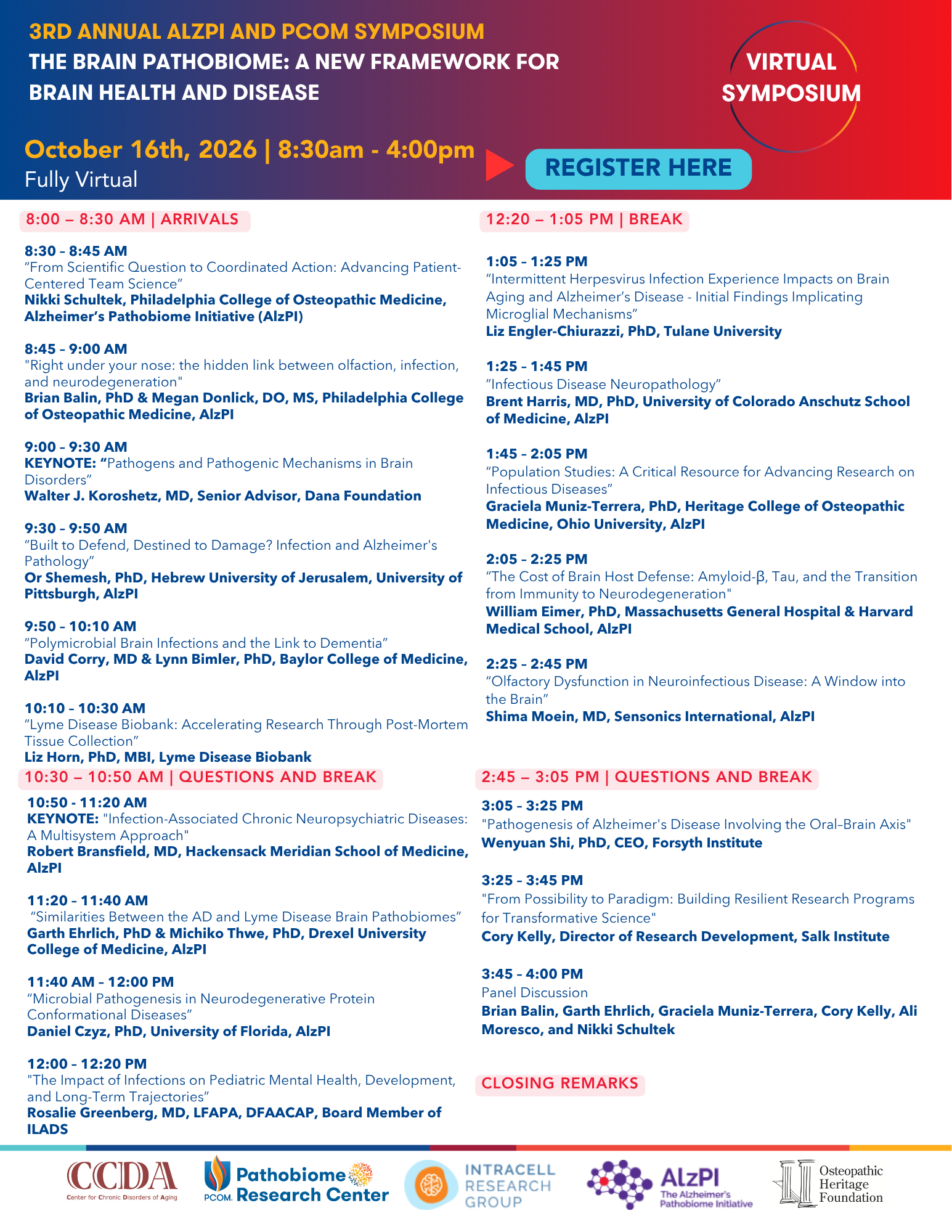
Join us for the 3rd Annual Alzheimer’s Pathobiome Initiative (AlzPI) & Philadelphia College of Osteopathic Medicine (PCOM) Virtual Symposium

“The Brain Pathobiome: A New Framework for Brain Health and Disease”

Friday, October 16, 2026, from 8:30 AM–4:00 PM ET

This year’s symposium brings together leading scientists and clinicians across neuroscience, infectious disease, immunology, psychiatry, neuropathology, and more to explore the brain pathobiome across the human lifespan. By bridging disciplines and diseases, we aim to uncover shared biological mechanisms and accelerate new approaches to understanding brain health and disease.

Brain diseases don’t respect disciplinary boundaries. Our approach to understanding them shouldn’t either.

Virtual | Registration: $30 | Students FREE
  • Discover the emerging concept of the brain pathobiome and how microbes, the immune system, and the brain may interact throughout life.

  • Explore the latest evidence linking infections and host immune responses to Alzheimer's disease, Parkinson's disease, PANS/PANDAS, and psychiatric disorders.

  • Learn how advances in neuropathology, molecular diagnostics, genomics, and biomarker discovery are transforming our understanding of brain disease.

  • Examine the biological mechanisms through which pathogens, inflammation, vascular dysfunction, and immune dysregulation may contribute to neurological disease.

  • Gain insights into innovative experimental models and translational research that are advancing new approaches to diagnosis, prevention, and treatment.

  • Hear directly from NIH leaders, practicing clinicians and internationally recognized scientists about emerging research priorities, collaborative initiatives, and future funding opportunities.

  • Understand how multidisciplinary collaboration is accelerating discoveries by integrating neuroscience, infectious diseases, immunology, psychiatry, pathology, precision medicine, and beyond.

  • Explore a new framework for brain health and disease that challenges traditional silos and encourages innovative approaches to understanding complex neurological and psychiatric conditions across the human lifespan.